


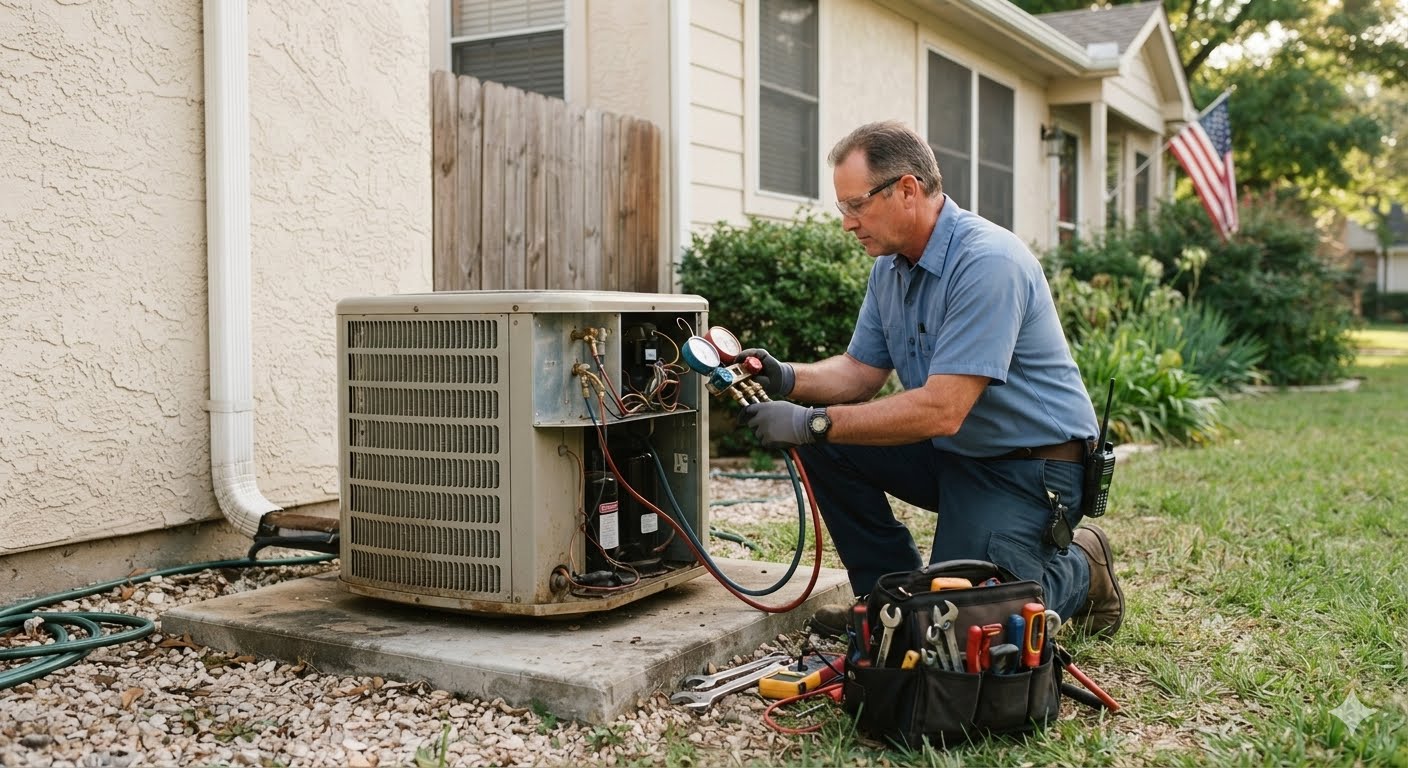
Your air conditioner never really gets a break. The moment a service visit ends, daily wear resumes. That’s why AC maintenance in Phoenix matters long after the technician leaves. Months of desert heat, dust, and constant cycling slowly affect parts hidden from view. Nothing usually fails overnight. Small changes add up little by little until one scorching afternoon, your system struggles to keep up, and the reason has been growing quietly all along.
1. The First Few Weeks Feel Effortless
Fresh off a tune-up, your AC is in its prime. Clean coils. Fresh filter. Refrigerant is charged just right. For a few weeks, it barely breaks a sweat. The cycles run short, the air feels crisp, and the unit clicks off without that long, dragging struggle you get later on. You won’t even notice how easy it feels, because it just works. Here’s the catch, though. This is about as good as your AC gets all year. From here, every part starts a slow slide in the wrong direction, gentle enough that you adjust without ever noticing the change.
2. What the Desert Quietly Does
Then Arizona does what Arizona does. Dust gets into everything, and your AC is no exception. Here’s what’s quietly piling up while you go about your day:
- Fine grit settles on the indoor coil like a blanket, making the system work harder for the same cool air.
- The filter turns gray weeks before you think to check it, choking the airflow.
- Outside, the condenser fins fill with dust and cottonwood fluff, so the unit fights to shed heat.
- The compressor kicks on more than it should, stacking up wear you can’t see.
None of it sets off an alarm. It just shows up as a slightly warmer house and a system running a lot more than it did in spring.
3. The Sounds Your AC Makes On Purpose
Parts rarely give out without warning. They talk first, if you listen. A capacitor on its way out makes the outdoor fan hesitate, that half-second pause before it spins up. A worn blower bearing whines on startup. A pitted contactor buzzes faintly on a quiet night. Most folks tune those noises out as normal house stuff. But every rough start strains parts that are already running warm. Catch the signs early, and it stays a small repair. Brush them off, and that tired part can drag the compressor down with it. The sneaky part? These sounds fade into the background until the afternoon, and nothing turns on at all.
4. The Hidden Stuff On the Refrigerant Side
The refrigerant loop is sealed up tight, so people assume it’s hands-off. It isn’t. Plenty can go sideways in there without a sound:
- A pinhole leak can bleed off the charge so slowly that cooling fades over weeks, not hours.
- A low charge lets the coil run too cold, so it ices over on humid mornings and drips by afternoon.
- A compressor that runs hot wears out faster, since heat is its worst enemy.
- A clogged condensate drain backs up, tripping the safety switch or pooling near the air handler.
By the time you feel weaker air at the vents, the system has often been limping for a while. That’s the trouble with the long gap between visits. The warning signs hide where you can’t reach them.
5. The Risky Window Before Your Next Check
By the time your yearly visit rolls back around, your AC has soaked up a full season of abuse. Overdue filter. Grimy coils. Small electrical parts are riding at the edge of what they can handle. This is right when units tend to quit, almost always on the hottest day, when it’s already maxed out. Booking the top AC service in Phoenix, AZ, before that peak hits lets a tech reset everything while the weather is still mild. They can swap the tired capacitor, top off the charge, flush the drain, and clear the coils in one morning. Get ahead of it early, and you skip the frantic heat-wave call when half the city is dialing the same number.
An air conditioner doesn’t die all at once. It fades, one dusty week and one hot cycle at a time, across the long stretch between checkups. Most of what goes wrong in there stays hidden until it suddenly isn’t, and by then the fix is bigger, and the timing is worse. The good news? You don’t have to obsess over it. Just remember your system is always shifting under the hood, and give it a clean reset before each summer instead of after it dies. Listen for the odd sounds, change your filter, and let a pro handle the rest on time.
The Phoenix heat never takes a day off, and neither should your comfort. Contact us today and trust Plomero en Phoenix to keep your AC performing at its best. Call (602) 730-4663 to schedule your service and enjoy a cooler, worry-free summer.
FAQs
Q1: How often should I get my AC checked if I live in Phoenix, AZ?
With heat like ours, once a year is the bare minimum, ideally in early spring before you’re running it nonstop. Plenty of Phoenix, AZ, homes also swap the filter mid-summer to keep airflow strong.
Q2: Why does my AC feel weaker by the end of summer in Phoenix, AZ?
Months of desert dust pile up on the coils and filter, so the unit fights harder to push cool air. Over a long Phoenix, AZ, summer, that buildup adds up, which is why a mid-season cleaning helps.
Q3: How do I know my AC needs a look before it actually breaks in Phoenix, AZ?
Usually, it warns you first. Strange hums, longer run times, or weaker airflow are early clues. People in Phoenix, AZ, who act on those signs tend to dodge the worst breakdowns when the heat peaks.